The U of A campus is actually quite peaceful around this time of day. As I write this, I am sitting in the shade on a thoughtfully placed bench outside of Old Main, enjoying the cool weather and a warm cheeseburger. The serenity is not constant, though. Fifteen minutes ago, a guy in a banana suit ran down the Mall screaming "Help me!" while someone dressed as King Kong followed him in hot pursuit. Interesting.
I'm redoing this analysis tonight, except I will be inputting full-length genomes rather than 27-nucleotide strings. I am so glad that Mr. Johnston put us through all of that genetics stuff; without it I would be lost right now.
After he was satisfied with the reports I gave him, Frans showed me how to plant the Arabidopsis seeds correctly: what type of container to use, soil to fertilizer ratios, how much water to use, and finally, what to do with the seeds once they are planted. We have to put them into a "cold room" for 2 to 4 days before the plants sprout. The reason for this is that cabbages and other related plants will not grow very tall until exposed to cold temperatures.
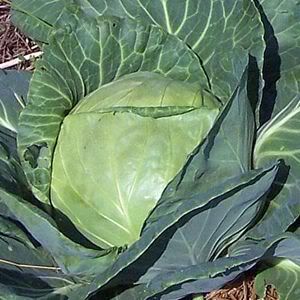
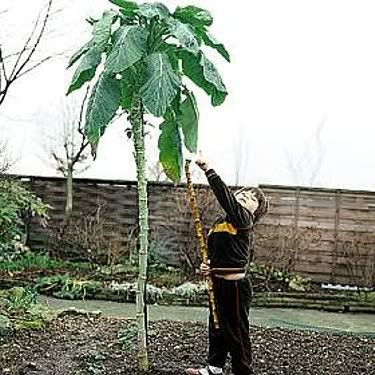
For an example of what these temperatures can do, take a look at your average cabbage. (image) This cabbage is no older than a few seasons, and as you can see, is not very tall. Now, let's take a look at the same species of cabbage a few years later. (image) You'd hardly believe that was a cabbage! Brassica oleracea, your common cabbage, can grow to over six feet tall if allowed to grow through two or three winters.
This is why we put our seeds in the cold room. If we simulate winter temperatures, we can induce the plants' early growth. When they all grow their sprouts, we can compare their heights and make an educated guess as to which of the mutants are dwarfed as a result of the absence or deficit of various proteins.
(Back to my project.) After we planted the Brassica oleracea seeds, Frans showed me how to run a computer program that aligns multiple nucleotide sequences so that the similarities and differences can be viewed in a more linear fashion than is possible with BLAST. I aligned most of the sequences that I had found on the database, but it turns out that a string of 27 nucleotides didn't give me enough information to be able to design primers. (Big surprise.) So, tonight I will be rerunning the BLAST searches that I performed last night, except with a much larger sequence than I used previously.
Tomorrow, after realigning the new sequences, Frans wants me to attend a two hour mini-seminar about DNA prep: primers, PCR, and the like. I expect that it will be incredibly helpful; I most definitely need a refresher on PCR .

Josh...That sounds very impressive
ReplyDelete